 Skip-the-line available
 Alcobaça vs Batalha Monastery — Which Portuguese Gothic to Visit
Two the site authority Gothic monasteries, 20 minutes apart, both UNESCO. Here's how they compare on architecture, story, crowds and which to pick if you can only do one.
Alcobaça and Batalha are 20 minutes apart by car, both UNESCO World Heritage Sites, both operated by the site authority. They are routinely visited together on a single day, and visitors often arrive without a clear sense of how they differ. This guide compares them directly on architecture, story, crowd and the visit experience, so you can pick the right order — or, if you only have time for one, the right one.
The headline differences
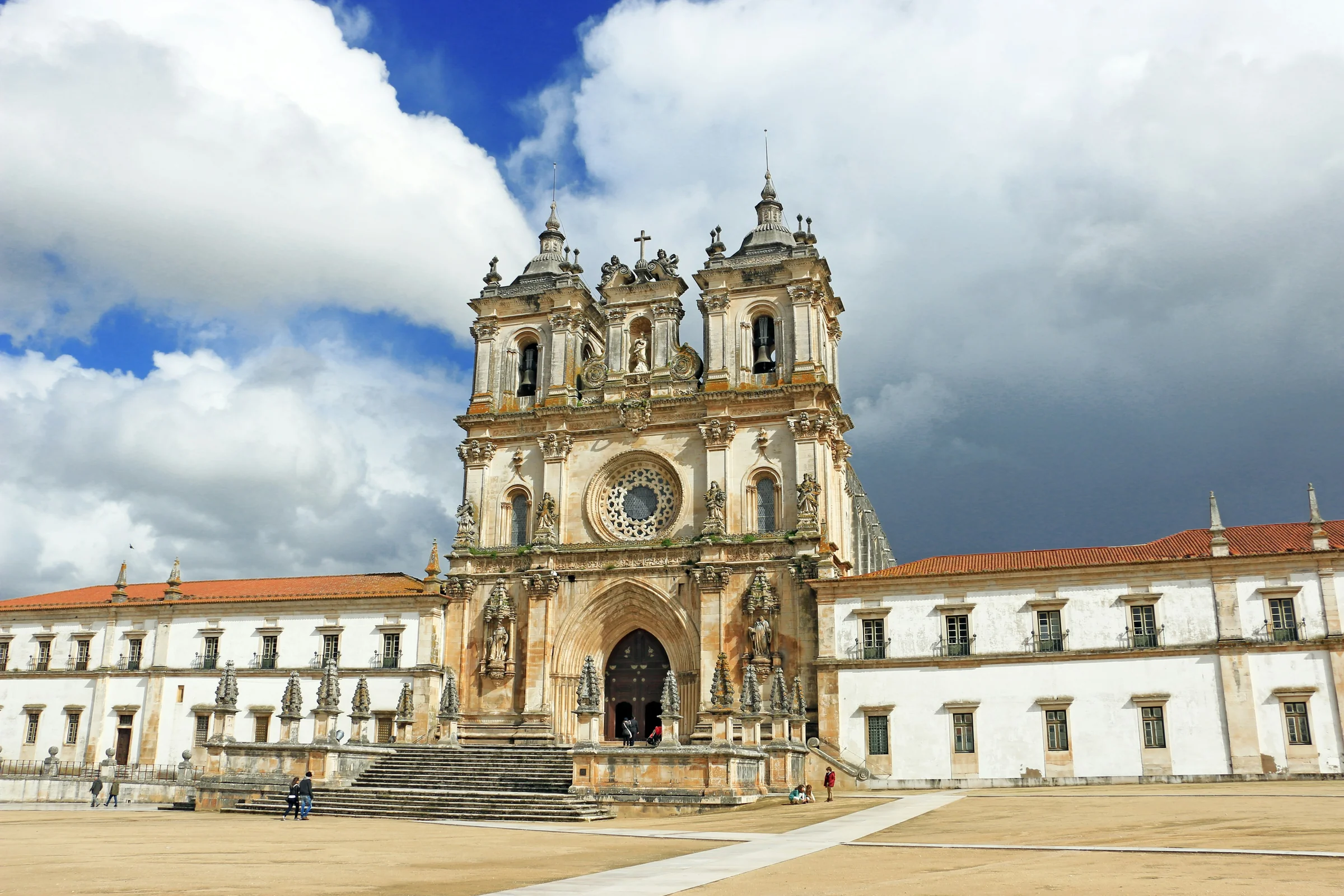
Alcobaça (1153, Cistercian Gothic) is older, larger, and architecturally more austere — the Cistercian Order rejected decoration, and the church interior reads as one of Europe's clearest examples of stripped-back Gothic. The headline drama is the pair of carved tombs of King Pedro I and Inês de Castro, his secret-bride-turned-corpse-queen, in opposing transepts — one of medieval Europe's most famous tragic-romantic stories.
Batalha (founded 1386, Manueline-Gothic) is later and more elaborate. Built to commemorate the Portuguese victory at Aljubarrota (1385), the building's exuberant late-Gothic and Manueline decoration is the most ornate of any Portuguese monastery. The headline element is the Unfinished Chapels (Capelas Imperfeitas) — a roofless octagonal mausoleum that was being built when funding stopped in the early 16th century. Open sky overhead, intricately carved arches around. There is nothing else quite like it in Portugal.
What you see in each
Alcobaça: the Cistercian nave (one of the largest in Iberian Gothic), the Pedro and Inês tombs in opposing transepts, the Cloister of Dom Dinis (early 14th century), the Kings' Hall with painted azulejo panels of the kings of Portugal, the kitchen (with a chimney reportedly large enough to roast 'six oxen at once'), and the refectory.
Batalha: the Founder's Chapel (housing the tombs of João I and Philippa of Lancaster, plus their sons including Henry the Navigator), the Royal Cloister with its Manueline arches, the unfinished Capelas Imperfeitas at the east end (open sky), the Chapter House with the Tomb of the Unknown Soldier and an eternal flame, and the main nave with stained glass.
Time and crowds
Both sites take about 90 minutes to 2 hours for a thorough visit. Crowds peak 11:00–14:00 in both, when coach tours from Lisbon arrive. The standard day-trip pattern visits Alcobaça first (morning, less queue at opening) then Batalha (afternoon, often with Fátima or Nazaré squeezed in). Doing them in the opposite order works equally well — Batalha tends to open slightly earlier in some seasons.
Batalha sees marginally more visitors than Alcobaça due to its association with the Aljubarrota battle and Henry the Navigator, both well-known historical reference points. Alcobaça gets a steadier flow because of the Pedro and Inês story being staple Portuguese literature curriculum. Both feel manageable outside peak hour-windows.
Which to pick if you can only do one
Pick Alcobaça if: you're drawn to austerity and architecture, you want the larger Cistercian space, you have a literary interest in the Pedro and Inês story (which features in centuries of Portuguese poetry and drama), or you want the famous chimney and kitchen as a side-trip. The 12th-century origins make it the older of the two.
Pick Batalha if: you want the Unfinished Chapels (which is the more photographed and more singular space of the two), you have an interest in Henry the Navigator (whose tomb is here) or the Aljubarrota battle, or you prefer late-Gothic Manueline ornament over Cistercian austerity. The royal mausoleum atmosphere is unique.
Frequently asked
Which is older, Alcobaça or Batalha?
Alcobaça is older — founded in 1153 by Afonso Henriques after the conquest of Santarém. Batalha was founded in 1386 by João I after the Battle of Aljubarrota. Alcobaça predates Batalha by over 230 years.
How far apart are Alcobaça and Batalha?
About 20 km, or 20 minutes by car via the N1 road. Both are in the Leiria district of central Portugal. The standard day-trip combines both with Nazaré (15 minutes from Alcobaça) or Fátima (15 minutes from Batalha).
Can I see both monasteries in one day?
Easily — the standard schedule is Alcobaça morning (09:00–11:00), drive 20 minutes, Batalha late morning to early afternoon (11:30–13:30), then lunch in Nazaré or back to Lisbon. Full day with both monasteries, 1 hour driving, and lunch fits in 7 hours.
Is the Unfinished Chapels at Batalha or Alcobaça?
At Batalha. The Capelas Imperfeitas (Unfinished Chapels) is an octagonal mausoleum at the east end of Batalha Monastery, roofless because funding stopped in the early 16th century. It is one of Portugal's most photographed architectural spaces.
Where are Pedro I and Inês de Castro buried?
Both are buried at Alcobaça Monastery, in opposing transepts of the main church. Their elaborately carved 14th-century tombs face each other across the transept, illustrating the most famous tragic love story in medieval Portuguese literature.
Are both monasteries free to enter?
No — both require a paid entrance ticket. A combined the site authority ticket covering both Alcobaça and Batalha (and sometimes Convent of Christ in Tomar) offers a small discount over individual tickets. Confirm current combined-ticket details at the ticket office.