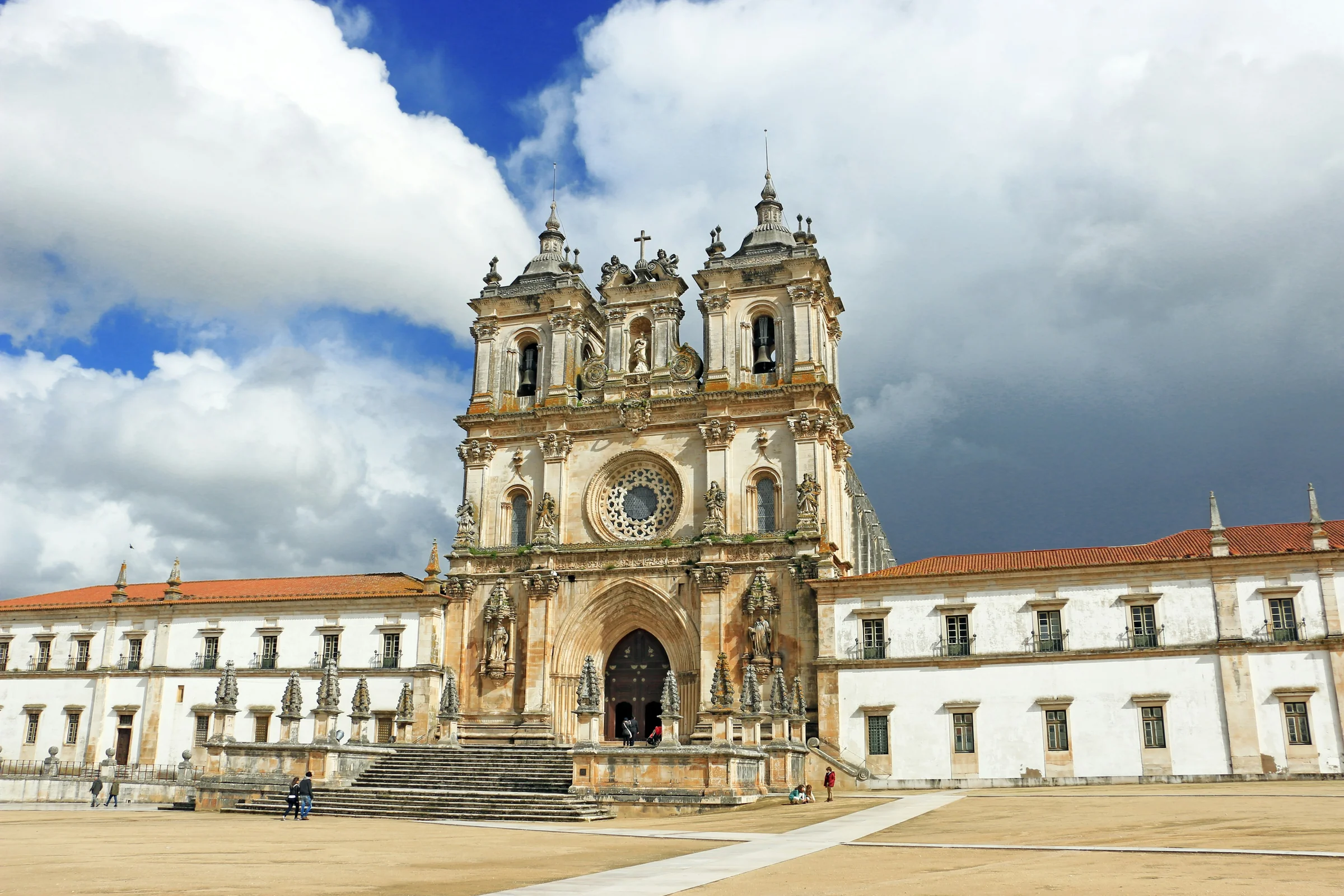
 Skip-the-line available
 The Pedro and Inês Tombs — A Detail Guide
What to look for in the two finest 14th-century carved tombs in Portugal — the carving programme, the inscriptions, and the legend of resurrection.
The Pedro and Inês tombs at Alcobaça are among the finest examples of 14th-century funerary sculpture in Europe — and arguably the single most famous artwork in any Portuguese monastery. Visitors arrive knowing the tragic-romantic story; few know what to look at on the tombs themselves. This guide is a close walkthrough of the carving programme — the scenes, the inscriptions, the legend — so you can read the stone like the medieval visitors were meant to.
The placement — opposing transepts
The two tombs are placed in opposing transepts of the main church — Pedro in the south transept, Inês in the north (or vice versa, depending on which guide you read). They face each other across the nave. The medieval logic is the Resurrection: on the Last Day, Pedro and Inês would rise from their tombs and see each other immediately. The placement is intentional and reflects Pedro's specific written instructions in his will.
Both tombs sit at floor level on supporting figures of monks or angels. The effigies of Pedro and Inês lie on top of each — both shown in their royal robes, eyes closed, hands joined in prayer over the chest. The carving of the faces and the drape of the robes is the finest detail of the work; the figures look serene rather than triumphant.
The carving programme — sides and ends
Each tomb has narrative scenes carved into the side and end panels. Pedro's tomb sides depict the lives and miracles of Christ — the Annunciation, the Adoration of the Magi, the Crucifixion, the Resurrection. The end panels show the Wheel of Life (a medieval iconography of the ages of man, from birth through death) and other allegorical scenes. The detail is finer than any other 14th-century tomb in Portugal and reflects French Gothic sculptural influences — the carvers may have been French-trained.
Inês's tomb is similarly decorated but with different scenes — the Last Judgement and the seven deadly sins (Pride, Envy, Wrath, Sloth, Greed, Gluttony, Lust) personified as figures. The choice of subjects for each tomb has been interpreted as Pedro choosing the optimistic salvation-narrative for himself and the moralising-judgement narrative for the wife he had lost — though scholars debate the symbolism.
What was lost — French troops and modern restoration
The tombs were damaged in 1810 during the French Peninsular War, when Napoleonic troops looted and partially destroyed many religious artworks across Portugal. Several of the original carved figures around the tombs were broken; some were stolen and have never been recovered. Modern restoration has stabilised the structures but not replaced the missing fragments. Look closely at the carved supporters at the base of each tomb — some are 19th-century replacements rather than 14th-century originals.
The carved faces of Pedro and Inês themselves survive substantially intact. Both effigies have lost minor details (hands, fingertips) but the overall faces and robes are 14th-century originals. The depth of carving is best appreciated from above (looking down at the effigies) and from a low angle on the side panels. Visitors typically spend 8–10 minutes at each tomb; serious viewers spend 30 minutes.
The legend versus the documented history
The famous story of Pedro exhuming Inês's body and having her crowned, with the courtiers forced to kiss her dead hand, comes from later chroniclers — primarily Fernão Lopes (writing in the 15th century, nearly a century after the events). Earlier sources are less explicit. The political logic is solid: Pedro publicly legitimised his secret marriage and his children with Inês by the dramatic ceremony, regardless of whether the body itself was present.
What is documented: Inês was assassinated in Coimbra in 1355 on the orders of Pedro's father King Afonso IV. Pedro became king in 1357 and immediately had two of the three assassins captured and executed. The matching tombs at Alcobaça were commissioned during Pedro's reign and were complete by 1361. Pedro himself died in 1367 and was buried in the tomb he had commissioned. The story has been retold in Portuguese drama, poetry, and novels for six centuries — from Camões to modern fiction.
Frequently asked
Who are Pedro and Inês?
Pedro I of Portugal (king 1357–1367) and Inês de Castro (his secret bride, assassinated 1355 in Coimbra on the orders of Pedro's father King Afonso IV). Their carved 14th-century tombs at Alcobaça commemorate their relationship and Pedro's posthumous legitimisation of their marriage.
Why are the tombs facing each other?
By Pedro's specific written instructions in his will: on the Last Day at the Resurrection, Pedro and Inês would rise from their tombs and immediately see each other. The placement in opposing transepts is intentional medieval iconography reflecting Pedro's belief in their reunion at the end of time.
What is carved on the tombs?
Pedro's tomb sides show scenes from the life and miracles of Christ. Inês's tomb sides show the Last Judgement and the seven deadly sins as personified figures. End panels of both include the Wheel of Life and other medieval allegorical iconography. The carving is among the finest 14th-century European funerary sculpture.
Did Pedro really exhume Inês's body and have her crowned?
The story comes from 15th-century chronicler Fernão Lopes, writing nearly a century after the events. Earlier sources are less explicit. Whether the exhumation literally happened is debated by historians; what is documented is that Pedro publicly legitimised his marriage and their children, and that the tombs were complete by 1361.
Were the tombs damaged in any war?
Yes — French troops during the Peninsular War damaged the monastery in 1810. Several carved figures around the base of each tomb were broken or stolen. The main effigies of Pedro and Inês survived substantially intact; modern restoration has stabilised but not fully replaced the lost fragments.
How long should I spend looking at the tombs?
Most visitors spend 8–10 minutes at each tomb during a 90-minute monastery visit. Serious viewers with art-history interest can spend 30 minutes per tomb examining the side panels in detail. A magnifying glass is allowed for close inspection of the carving.