 Skip-the-line available
 Alcobaça Monastery — 900 Years of Cistercian Portugal
From the 1153 founding to the 1834 secularisation: how Portugal's largest Cistercian monastery shaped the country's literature, agriculture and royal succession.
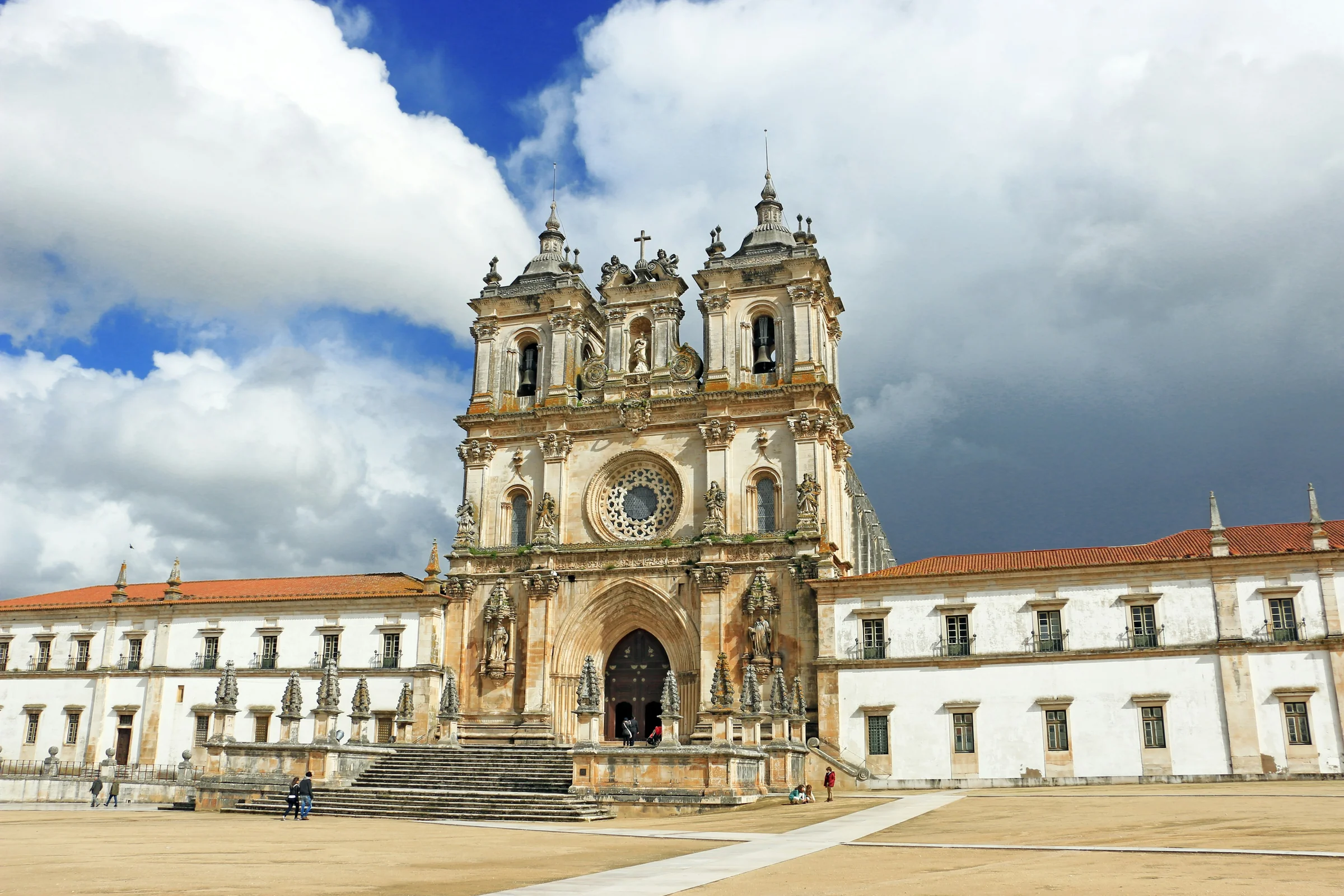
Alcobaça Monastery's history spans nearly 900 years — from its founding by the first king of Portugal in 1153 to the 1834 dissolution that closed all male religious orders in Portugal. In that time it produced some of the country's most influential agricultural reformers, hosted royal weddings and funerals, and gave Portuguese literature one of its enduring tragic-romantic stories. This guide is a clear factual timeline of the major events.
Founding — 1153
King Afonso Henriques, the first king of Portugal, vowed to build a Cistercian monastery if he succeeded in capturing Santarém from the Moors in 1147. He kept the vow: in 1153 he donated lands at Alcobaça to the Cistercian Order, and construction of the first monastery began. The Cistercians arrived from Clairvaux (France) under the influence of Bernard of Clairvaux, bringing the agricultural and architectural rigour the Order was known for across 12th-century Europe.
The first church was completed in 1252. By the mid-13th century the monastery was one of the wealthiest and most politically influential institutions in the kingdom. The Cistercians at Alcobaça pioneered agricultural reforms — drainage of marshes, introduction of fruit-tree cultivation, vineyards and selective wheat-breeding — that shaped Portuguese rural economy for centuries. The monastery school taught generations of Portuguese clergy and produced significant theologians, historians and poets.
Pedro and Inês — 14th century
The monastery's most famous story is the 1355 murder of Inês de Castro and the subsequent royal vengeance of King Pedro I. Inês was the secret bride of Pedro, then crown prince. Pedro's father, King Afonso IV, ordered her assassination to preserve the political alliance with Castile. When Pedro became king in 1357, he is said to have had her body exhumed and crowned, and the two assassins were executed publicly. The historical accuracy of the exhumation has been debated for centuries — some chroniclers report it, others do not.
Pedro had matching elaborately carved tombs constructed for himself and Inês, placed in opposite transepts of the church so that on Resurrection Day they would rise facing each other. The tomb sculptures are some of the finest 14th-century stone carving in Europe — covered in scenes from the lives of Christ, the Last Judgement, and the seven deadly sins. The Pedro and Inês story has been retold in Portuguese drama, poetry and novels for six centuries; it is foundational Portuguese literature.
15th to 18th centuries — peak and decline
Through the 15th and 16th centuries Alcobaça remained one of the wealthiest institutions in Portugal. The Cloister of Dom Dinis was completed (early 14th century), the Kings' Hall received its painted azulejo panels (17th century), and successive building programmes added the kitchen, refectory and dormitories. The monastery housed a library of over 60,000 manuscripts and printed books — one of the largest in Iberia.
The 1755 earthquake damaged but did not destroy the church (the Romanesque core construction survived). The French Peninsular War (1807–1814) brought looting — French troops sacked the library and took religious furniture; the monastery never fully recovered its lost manuscripts. By the early 19th century, the monastic life had declined from its peak medieval intensity.
1834 dissolution and modern restoration
In 1834, the Portuguese liberal government dissolved all male religious orders and confiscated their property. The Cistercian community at Alcobaça was expelled; the buildings passed to state ownership. The library was dispersed — much of it transferred to the Portuguese National Library in Lisbon, where significant collections remain today.
The monastery was declared a National Monument in 1907. Restoration work continued through the 20th century, with major campaigns in the 1930s, 1970s and 2010s. UNESCO inscribed Alcobaça as a World Heritage Site in 1989 (with Batalha and Tomar's Convent of Christ added later). Today the church and the cloister are open to visitors year-round; the monastery is no longer a religious community but a heritage site.
Frequently asked
How old is Alcobaça Monastery?
Founded in 1153 by King Afonso Henriques, making it 873 years old in 2026. The first church was completed in 1252; the monastery as we see it today is the result of building campaigns from the 12th through 18th centuries.
Why is Alcobaça Monastery famous?
Three reasons: it is the largest Cistercian church in Portugal (one of the largest Gothic spaces in Iberia); it holds the carved 14th-century tombs of King Pedro I and Inês de Castro, the most famous tragic love story in medieval Portuguese literature; and the Cistercians at Alcobaça pioneered agricultural reforms that shaped Portuguese rural economy for centuries.
Who are Pedro and Inês de Castro?
Pedro I of Portugal (king 1357–1367) and Inês de Castro (his secret bride, assassinated 1355 on the orders of Pedro's father). After becoming king, Pedro had elaborate matching tombs carved in Alcobaça for himself and Inês, placed in opposing transepts. Their story is foundational Portuguese literature.
Is Alcobaça still a working monastery?
No. The Cistercian community was dissolved in 1834 when the Portuguese liberal government closed all male religious orders. The buildings became state property and are now a UNESCO World Heritage Site open to visitors. There is no active monastic community.
When was Alcobaça Monastery made a UNESCO site?
1989. The inscription covers the church, the cloister, the kitchen, the refectory, and the Kings' Hall. The medieval library has been dispersed (much of it transferred to the Portuguese National Library in Lisbon) but the architecture is preserved.
What is the Cistercian Order?
A Catholic reformist monastic order founded at Cîteaux Abbey in France in 1098. The Cistercians stressed manual labour, simplicity, and architectural austerity — rejecting the decoration of Cluniac Benedictine monasteries. They were renowned across medieval Europe for agricultural innovation and for the architectural style now called Cistercian Gothic, of which Alcobaça is the largest Iberian example.